
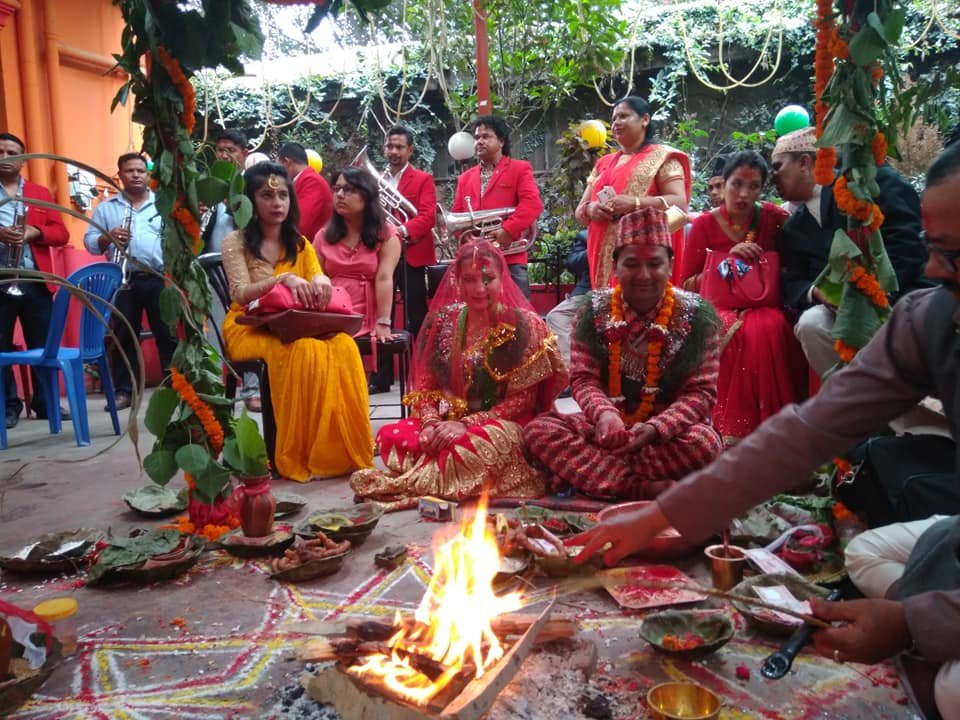
Explore essential Nepali wedding traditions—bridal saree, mehendi, kusha rings, kanyadan, khutta dhune, sindoor, dubo ko mala, supari, khata, and more. A simple, heartfelt guide for couples planning a Nepali Hindu wedding.
Nepali weddings are vibrant, emotional, and deeply symbolic. Blending Hindu rituals with cultural customs, each ceremony honors not only the couple but the union of two families. This guide highlights the most meaningful traditions you’ll experience in a Nepali Hindu wedding.
Brides wear a red saree or lehenga representing purity, love, power, and good fortune. Embellished in gold and green, the saree is draped with care, often by a specialist.
Held the day before the wedding, mehendi (henna) is applied to the bride’s hands and feet. The darker the stain, the stronger the groom’s love—according to tradition. It’s a joyful pre-wedding celebration with friends and family.
A sacred kusha-grass ring is worn by both bride and groom at the start of the ceremony, symbolizing purity and spiritual protection.
During pooja, the couple offers prayers to deities and nature.
One of the most meaningful moments is Kanyadan, where the bride’s parents place her hands into the groom’s hands. It symbolizes their blessing, trust, and the emotional transition of their daughter into a new family. This sacred gesture is often one of the most touching parts of the ceremony.
In many Hindu Nepali weddings, the bride’s family performs Khutta Dhune, the ceremonial washing of the groom’s feet. This act of respect welcomes him as an honored guest and purifies the moment before the marriage vows. Though some modern weddings skip the ritual, it remains a cherished tradition in many communities.
The bride circles the groom three times, symbolizing unity and the merging of their spiritual paths. Water, flowers, or rice may be used depending on the cultural tradition.
Traditionally, the bride bows to the groom after circling him. Modern couples often adapt this to reflect equality—offering mutual gestures of respect instead.
The couple exchanges dubo ko mala, garlands made from long-lasting Bermuda grass. They represent an enduring marriage filled with good fortune.
The groom applies sindoor to the bride’s hair parting, symbolizing that they are officially married. Married women wear sindoor during special events and festivals.
A tilhari—the red-and-gold pote necklace—is gifted by the groom’s family and worn by married women. It symbolizes the bride’s new status and marital blessings.
The bride offers betel nuts to the groom’s family, who keep one and return the rest—symbolizing her acceptance into the family and the beginning of new bonds.
Younger family members bow to elders to receive blessings for health, happiness, and prosperity. After the wedding, the bride both receives and offers blessings as a new member of the family.
After the ceremony, the couple greets hundreds—sometimes thousands—of guests in a receiving line, receiving gifts, flowers, and khata scarves.
Guests offer khata, scarves symbolizing good luck, purity, and respect. The couple may receive dozens of these blessings throughout the event.
A fun highlight! The bride’s sisters or friends steal the groom’s shoes and demand a playful ransom. It’s a lively moment that brings laughter to both families.
A traditional farewell where the bride says goodbye to her family as she joins her new home. Modern couples adapt this depending on their living situation and lifestyle.
The groom’s family arrives in a joyous street procession filled with music, dancing, and celebration. After the ceremony, they escort the bride to her new home.
Upon reaching the groom’s home, younger female relatives playfully block the entrance until the bride offers a symbolic gift. Elders then welcome her with blessings.
Nepali weddings are a beautiful blend of spirituality, family, culture, and celebration. Every ritual—from sindoor to kanyadan to dubo ko mala—honors love and new beginnings. Whether you’re planning your wedding or attending one, these traditions create memories that last a lifetime.
Your cart is currently empty.